.png)
Everything Neuroscience (ΣN)

THIS YEAR'S THEME
NEUROPATHOLOGY
The 13th Annual Everything Neuroscience (ΣN) Conference will explore the complex mechanisms, diagnosis, and innovative treatments of diseases of the nervous system. This conference offers a unique opportunity to hear from world-renowned scientists and clinicians showcasing their cutting-edge research in neuropathology.

SPEAKER SESSIONS & HIGHLIGHTS
KEY THEMES ΣN 2026:
-
Parkinson’s Disease & Movement Disorders – Advancing translational research and deep brain stimulation
-
Memory & Cognitive Neuroscience – Mechanisms of memory, forgetting, and brain development
-
Brain Injury & Neural Repair – Electrical stimulation and cellular reprogramming strategies
-
Protein Misfolding & Neurodegeneration – Prion-like mechanisms in Alzheimer’s and Parkinson’s disease
-
Neuroplasticity & Cell Signaling – Molecular pathways in stroke, pain, and psychiatric disease
-
Artificial Intelligence in Neuroscience – AI-driven characterization of neurodegenerative disorders
-
Clinical Translation & Mentorship – Bridging discovery, patient care, and training
SPEAKERS

Speaker
DR. CHARLES TATOR
“I received my MD and PhD at the University of Toronto more than 60 years ago and am still here because I love the place and still love doing neuroscience research.
Along the way, I also became a neurosurgeon and treated thousands of people with neurological problems. I still treat patients and still do research to discover more answers for them. I love telling students about my journey because we desperately need more discoveries, and hopefully many of them will be made by students reading this or hearing my talk.”

Speaker
DR. ANTHONY LANG
Dr. Lang is Professor and previous Director of the Division of Neurology at the University of Toronto. He holds the Jack Clark Chair for Parkinson’s Disease Research and the Lily Safra Chair in Movement Disorders. He is the Director of the Edmond J. Safra Program in Parkinson’s Disease, the Rossy Progressive Supranuclear Palsy Program and the Morton and Gloria Shulman Movement Disorders Clinic, Toronto Western Hospital and the University of Toronto.

Speaker
DR. CINDI MORSHEAD
Dr. Morshead is a tenured Professor and Chair of the Division of Anatomy. She received her PhD from the University of Toronto and started her lab in 2003 as a faculty member in the Department of Surgery.
Her team has developed innovative methodologies for the treatment of brain injury, contributing to ongoing clinical trials and pursuing novel strategies to activate neural repair mechanisms including the application of electrical stimulation and astrocyte to neuron cellular reprogramming to replace lost cells.

Speaker
DR. PAUL FRANKLAND
Paul Frankland is a Senior Scientist in the program in Neurosciences & Mental Health at the Hospital for Sick Children, and a fellow of the Royal Society of Canada and the Canadian Academy of Health Sciences. He holds a Canada Research Chair in Cognitive Neurobiology, and is appointed as a Full Professor in the Department of Psychology, Department of Physiology and Institute of Medical Science at the University of Toronto.
He is also a member of the Canadian Institute for Advanced Research (CIFAR) in the program for Child and Brain Development. His research program combines behavior, imaging and molecular approaches to study the neurobiology of memory. Using contemporary tools, Frankland has tackled classical questions in the memory field: Why do we lose our earliest childhood memories? Are memories are broadly distributed or localized in the brain? How does the brain forget? Is it possible to implant memories?
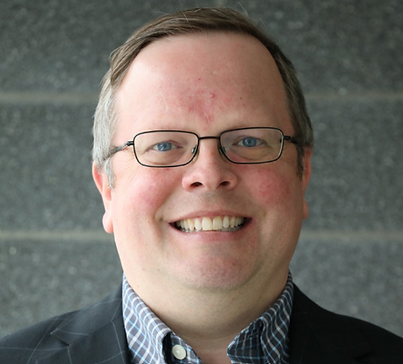
Speaker
Dr. JOEL WATTS
Dr. Watts obtained his PhD in Laboratory Medicine and Pathobiology from the University of Toronto and then conducted postdoctoral research in the lab of Nobel laureate Stanley Prusiner at the University of California San Francisco. He is currently a Principal Investigator at the Tanz Centre for Research in Neurodegenerative Diseases, an Associate Professor within the Department of Biochemistry at the University of Toronto, and is the Canada Research Chair in Protein Misfolding Disorders.
His research interests include studying the role of self-propagating, prion-like protein aggregates in Alzheimer’s disease and Parkinson’s disease as well as exploiting the unique properties of the bank vole prion protein to develop improved animal and cellular models of the prion disorders.

Speaker
DR. MICHAEL SALTER
Mike is a Senior Scientist and Emeritus Chief of Research at The Hospital for Sick Children and Professor in the Department of Physiology at the University of Toronto. He received his MD at the University of Western Ontario and his PhD from McGill University. Mike is determining fundamental molecular and cellular mechanisms of normal and pathological neuroplasticity.
His discoveries have broad implications for the control of cell-cell communication throughout the nervous system. He is using his discoveries to design and develop molecules that target major cell signalling pathways in neurons and in glial cells involved in pain, stroke, neurodegenerative diseases, and schizophrenia. He has received numerous awards for his work, including being an International Research Scholar of the Howard Hughes Medical Institute and a Fellow of the Royal Society of Canada.

Speaker
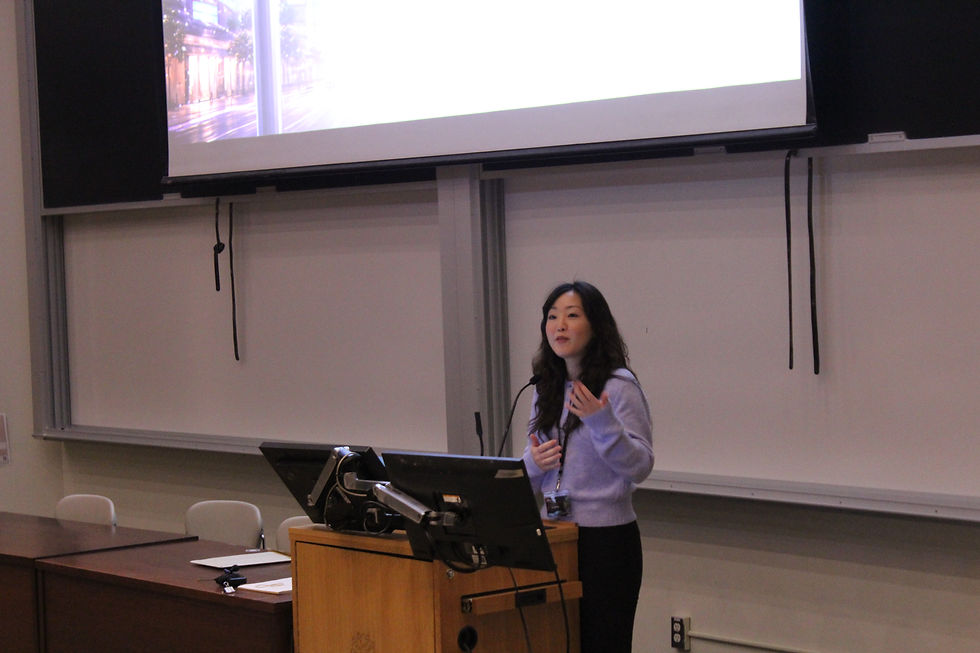
DR. AIN KIM
Dr. Ain Kim is a post-doctoral researcher at the Tanz Centre for Research in Neurodegenerative Diseases (CRND), University of Toronto. Dr. Kim's research explores the application of artificial intelligence (AI) to transform and deepen our understanding of neurodegenerative diseases, with a particular emphasis on the morphological, biochemical, and cytopathological characterization of these diseases.

ACKNOWLEDGEMENTS & SPECIAL THANKS
A huge thank you to:
🎤 Our incredible speakers for sharing their expertise
🎓 Our attendees for engaging discussions and making the event a success
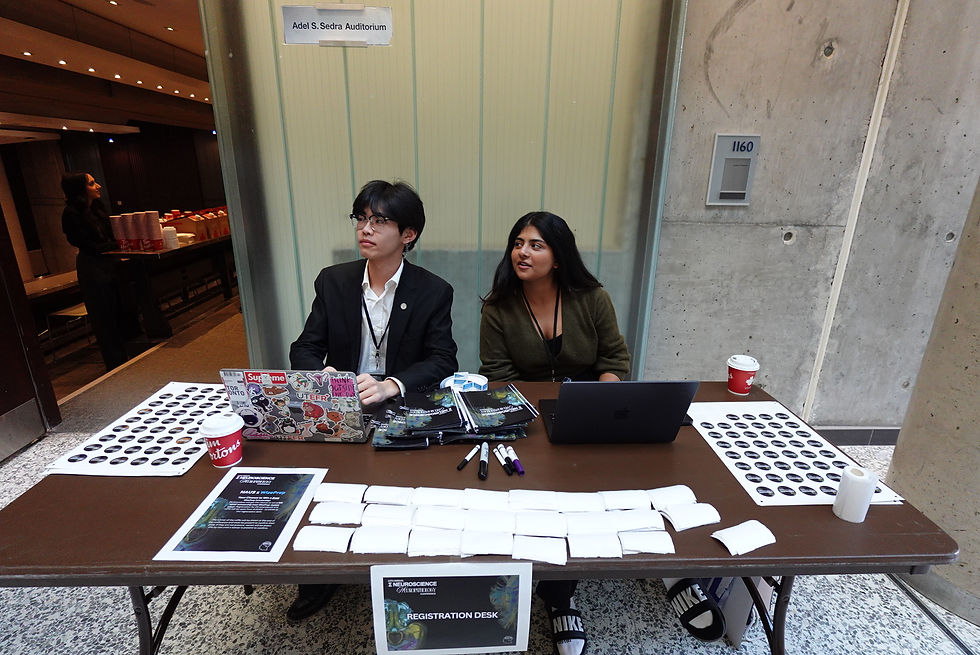
🧠 The NAUS Executive Team for organizing this year’s ΣN Conference
💡 Our sponsors & partners (La Rio's Mexican Grill) for supporting neuroscience education and innovation
💜 See you next year at ΣN 2027!
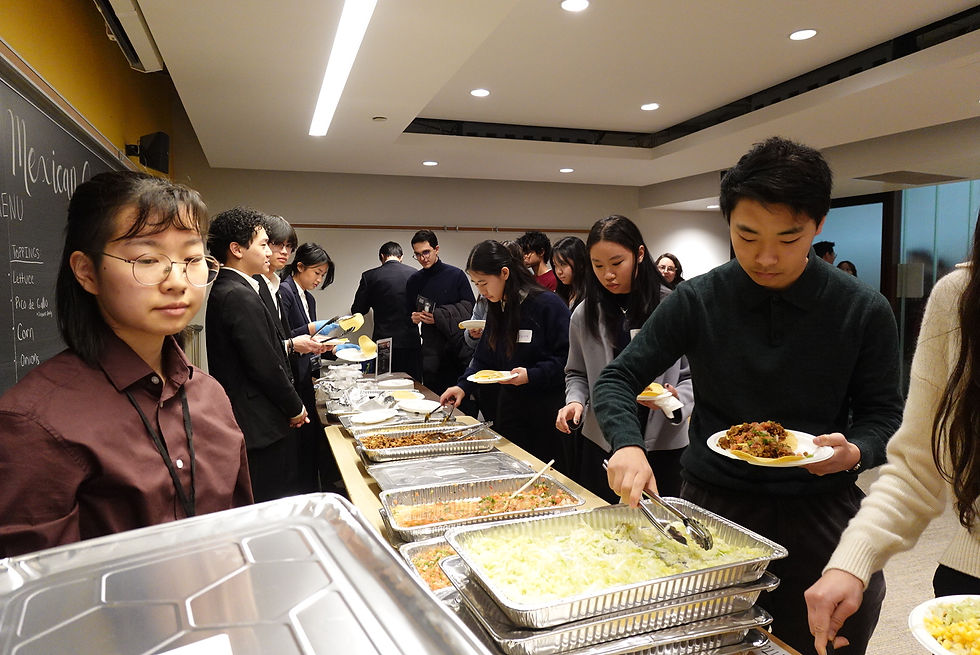
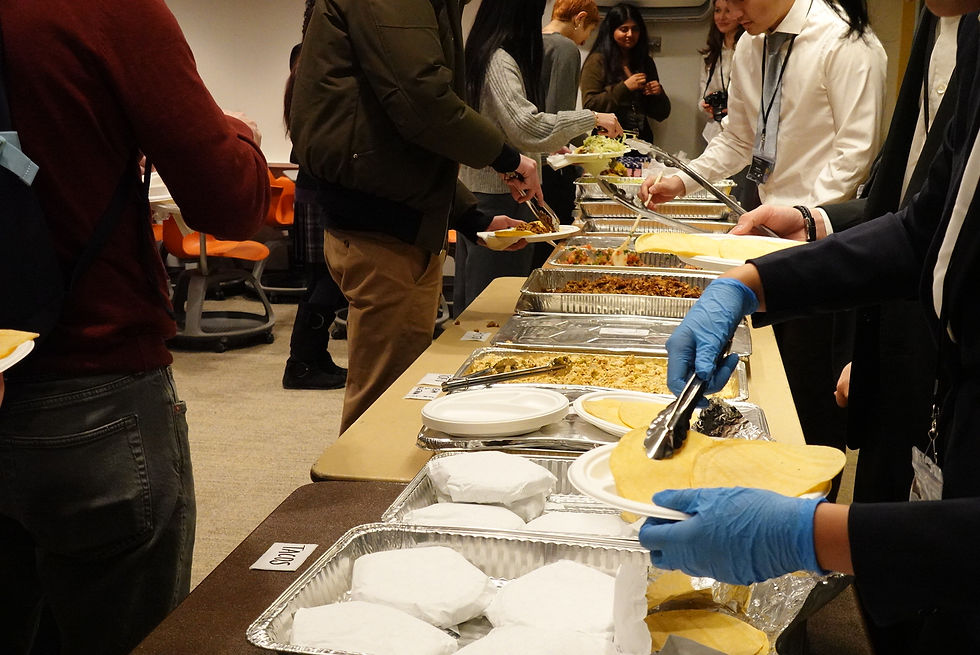
THANK YOU TO LA RIO'S MEXICAN GRILL!
Attendees were treated to an amazing taco bar spread that was beautifully set up… and absolutely delicious! We’re so grateful to La Rio’s for their generosity and for keeping everyone fueled with their fantastic food during our event.